Skip to content

How long to stay in one place

Dec 8, 2025 9 min reading time

TL;DR - How long you stay in one place shapes your entire travel experience. Short stays allow you to see more destinations, while longer stays create deeper, more meaningful connections. Slow travel typically means staying at least one to four weeks, or longer for digital nomads, until a place begins to feel familiar.

Loading image:

Free Slow Travel Guide

💻 Travel Planner
  • Plan every trip you ever take
  • Collaborate with others
  • Budget & tracking spending
📚 20+ page Slow Travel Guide
  • Location selection tips
  • Working remotely balance
  • Budget & packing tips
  • How to live like a local

One of the most common questions that comes up when planning a trip is deceptively simple.


How long should you stay in one place?


At first, it feels like something that should have a clear answer. But when you look closer, you realize it depends on how you want to experience travel in the first place.


Some travelers move quickly, spending a few days in each destination before continuing on. Others stay for weeks or months, settling into a place long enough for it to feel familiar.


There isn’t a single “right” answer.


But the length of your stay shapes almost everything about your experience. It affects how you move through a place, how you feel while you’re there, and what you take away when you leave.

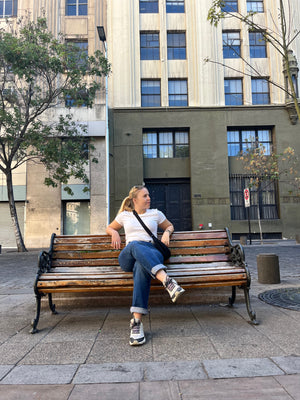
Loading image: Digital nomads travelling through Chile. Couple travel, slow travel, working remotely, vegan travel, budget travel. Slow travel and enjoying city centre near Santiago Parliament building. Female backpacker on bench. Digital nomads travelling through Chile. Couple travel, slow travel, working remotely, vegan travel, budget travel. Slow travel and enjoying city centre near Santiago Parliament building. Female backpacker on bench.

The Typical Travel Pattern


Most trips tend to follow a similar structure.


A few days in each destination, just enough time to see the main attractions before moving on. Two or three days becomes the default, especially when time is limited and there’s a desire to see as much as possible.


This approach works in a practical sense. It allows you to visit multiple places within a single trip and get a general sense of each one.


But it often comes with a tradeoff.


You arrive, orient yourself, explore quickly, and then leave just as things start to feel comfortable. There’s rarely enough time to move beyond the surface.


Travel becomes a sequence of arrivals and departures, rather than something you settle into.

The Slow Travel Approach


Slow travel takes a different approach to time.


Instead of asking how many places you can fit into a trip, it asks how long you need to actually experience a place.


For many slow travelers, that means staying at least a week. Often it means two or three weeks. In many cases, it extends to a full month or longer.


Digital nomads, in particular, often stay one to three months in a single destination. This allows enough time to build routines, maintain productivity, and explore at a more natural pace.


The longer you stay, the more a place begins to unfold.

Loading image:

The Benefits of Staying Longer


Spending more time in one place changes the way you experience it.


You begin to move beyond the areas designed for visitors and into neighborhoods where daily life happens. You notice details that would otherwise be easy to miss. The pace slows down, and your attention shifts from trying to see everything to simply being present.


Routines start to form naturally. You find a café you return to. You recognize streets without needing directions. The unfamiliar begins to feel familiar.


Travel also becomes less stressful. Fewer transitions mean fewer decisions, less planning, and more space to relax.


Instead of constantly adjusting to new environments, you have time to settle into one.

Recommended Stay Lengths


There’s no fixed rule for how long you should stay somewhere, but certain timeframes tend to align with different styles of travel.


For shorter trips, staying three to five days in a destination is often enough to explore the main highlights without feeling overly rushed. It gives you a bit of breathing room while still allowing you to visit multiple places.


For slow travel, one to four weeks tends to create a more balanced experience. It provides enough time to explore more deeply while still maintaining a sense of movement within a longer trip.


For digital nomads, one to three months is often ideal. This timeframe supports both work and exploration, allowing for routines to develop and a place to feel temporarily like home.

Signs You Should Stay Longer


Sometimes the best indicator that you need more time is how you feel while you’re there.


If you feel rushed, it’s often a sign that you haven’t had enough time to fully experience the place. If your days are filled with moving between attractions, it may mean you’re still operating at a fast pace.


If you haven’t had the chance to explore beyond the main areas, or if you haven’t developed any sense of routine, it’s likely that you’ve only seen a small part of what the destination has to offer.


Staying longer creates the space needed for those experiences to emerge.

Loading image:

Signs It’s Time to Move On


At the same time, there are moments when moving on makes sense.


If you begin to feel bored or disconnected from the place, it may be a sign that you’ve experienced what you were hoping to. If you find yourself repeating the same routines without curiosity, it might be time for a change.


Travel is still about exploration, and sometimes that means knowing when to leave.


The key is recognizing when your time in a place feels complete rather than cutting it short out of habit.

A Simple Rule for Slow Travelers


If there is one guideline that tends to work across different styles of travel, it’s this.


Stay long enough for a place to feel familiar.


That might mean having a café you return to without thinking. It might mean recognizing streets without checking a map. It might mean feeling comfortable enough to move through the city without planning every step.


That shift, from unfamiliar to familiar, is often where travel begins to feel different.


It’s the point where you move from visiting a place to, in some small way, living in it.

Conclusion


How long you stay in one place is not just a logistical decision. It’s something that shapes your entire experience.


Moving quickly allows you to see more places, but it often comes with a sense of urgency and surface-level experiences. Staying longer creates space for connection, familiarity, and a more relaxed pace.


Neither approach is inherently right or wrong.


But if your goal is to feel more connected to the places you visit, staying longer often makes all the difference.


And in many cases, that’s where the most meaningful parts of travel begin to happen.

Related blog posts.

How to Work Remotely While Travelling Slowly

Many digital nomads begin by moving quickly between countries, but constant travel often leads to burnout. Slow travel offers a different approach, staying longer in each destination to build routines, work productively, and experience places more deeply.

How to travel slowly on short trips

Slow travel isn’t just for long trips. Even a short getaway can feel deeper and more meaningful when you slow down, explore one place, and focus on experiences instead of checklists.

How we stopped time

Our perception of time stretches when life is full of new experiences instead of routine. Our travels have shown us that we can speed up or slow down time at will without a time machine.
Back to top