Skip to content

Slow Travel vs. Fast Travel

Dec 8, 2025 6 min reading time

TL;DR - Slow travel focuses on staying longer in fewer places to experience destinations more deeply, while fast travel prioritizes seeing as many places as possible in a short time. The best approach depends on your goals, depth and connection versus efficiency and variety.

Loading image:

Free Slow Travel Guide

💻 Travel Planner
  • Plan every trip you ever take
  • Collaborate with others
  • Budget & tracking spending
📚 20+ page Slow Travel Guide
  • Location selection tips
  • Working remotely balance
  • Budget & packing tips
  • How to live like a local

Most trips tend to follow a familiar rhythm.

You land somewhere new, move quickly through a list of places you’ve already saved, and then move on again before the place has time to feel familiar. The pace feels efficient. You cover a lot of ground in a short amount of time.

Three cities in five days is often considered a success.

The goal is simple. See as much as possible while you’re there.

This way of traveling is often referred to as fast travel.

Slow travel takes a different approach.

Instead of trying to experience as many destinations as possible, it focuses on spending more time in fewer places. The pace shifts, and so does the intention behind the trip.

Both styles have their place.

But they lead to very different experiences.

Loading image:

What Is Fast Travel?

Fast travel is built around movement.

It’s designed to maximize the number of places you visit within a limited amount of time. Days are structured, itineraries are tight, and transportation becomes a central part of the experience.

You move from one destination to the next, often every few days, trying to fit in the highlights before continuing on.

A typical example might be traveling from Paris to Rome to Barcelona within a single week. Each stop includes the major landmarks, a few meals, and just enough time to feel like you’ve seen the city before moving on again.

Fast travel appeals to people who want to experience variety. It allows you to see multiple places, cross destinations off your list, and get a broad sense of different regions in a relatively short period of time.

What Is Slow Travel?

Slow travel is less about movement and more about presence.

Instead of focusing on how many places you can visit, it centers on how deeply you can experience a single destination. Travelers stay longer, move less frequently, and allow their time to unfold with fewer constraints.

A slow travel experience might involve spending a month in a city like Florence, gradually exploring its neighborhoods, returning to the same cafés, and becoming familiar with the rhythm of daily life.

Schedules tend to be more flexible, and days are not built around trying to fit everything in. There is space for wandering, for repetition, and for the kinds of moments that don’t appear on an itinerary.

The emphasis shifts from sightseeing to living, even if only temporarily.

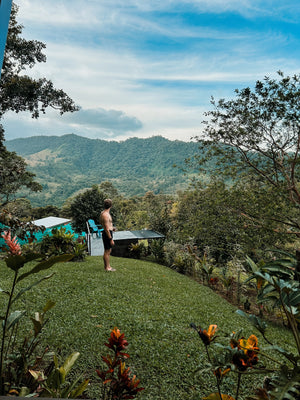
Loading image: Digital nomads in El Tigre Costa Rica at their Airbnb near Children's Eternal Rainforest in lush forested valley. Digital nomads in El Tigre Costa Rica at their Airbnb near Children's Eternal Rainforest in lush forested valley.

Key Differences Between Slow Travel and Fast Travel

The difference between slow travel and fast travel is not just about pace. It’s about how you choose to engage with a place.

Fast travel tends to involve multiple destinations, structured schedules, and a focus on major attractions. There is a sense of urgency, driven by the idea that time is limited and should be used as efficiently as possible.

Slow travel, on the other hand, focuses on fewer destinations, more flexible days, and local experiences. The urgency is replaced with curiosity. Instead of trying to see everything, you allow yourself to experience a place gradually.

One approach prioritizes quantity, while the other prioritizes quality.

The Benefits of Slow Travel

One of the most noticeable benefits of slow travel is the depth of experience it creates.

When you spend more time in a place, you begin to notice details that are easy to miss when moving quickly. You become familiar with neighborhoods, recognize faces, and understand how daily life unfolds.

Travel also tends to feel less stressful. Without the pressure of constant movement, there is more space to relax and explore at your own pace. Days feel less rushed, and there is less need to constantly plan what comes next.

Costs can also be lower. Fewer flights, longer accommodation stays, and the ability to cook or shop locally can make travel more affordable over time.

Perhaps most importantly, slow travel often leads to stronger connections. With more time, interactions with people and places feel more natural and less transactional.

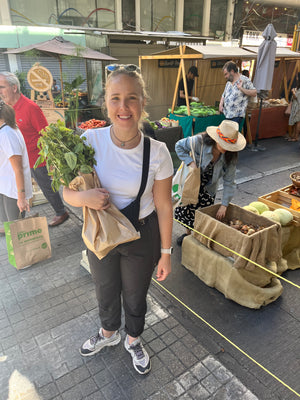
Loading image: Digital nomads travelling the world in Santiago Chile. Working remotely, slow travel, vegan travel, and budget travel. Visiting local market for fresh produce and vegetables, home cooked meal. Digital nomads travelling the world in Santiago Chile. Working remotely, slow travel, vegan travel, and budget travel. Visiting local market for fresh produce and vegetables, home cooked meal.

The Benefits of Fast Travel

Fast travel also has its advantages.

It allows you to experience a wide variety of destinations in a short amount of time. For travelers with limited vacation days, this can be the only way to see certain places.

It’s also well suited for bucket list travel. If your goal is to visit specific landmarks or cities, fast travel can help you achieve that efficiently.

There’s a certain energy that comes with moving quickly as well. Each destination feels new, and the constant change can feel exciting, especially at the beginning of a trip.

Which Travel Style Is Better?

There isn’t a single answer to this question.

The better approach depends on what you want your travel experience to feel like.

If your time is limited and your goal is to see as much as possible, fast travel can make sense. It allows you to experience multiple places and gain a broad understanding of a region.

If your goal is to feel connected to a place, to reduce stress, and to experience daily life more deeply, slow travel tends to be more rewarding.

The difference is not just in what you see, but in how you feel while you’re there.

A Balanced Approach

For many travelers, the most practical approach is somewhere in between.

It’s possible to combine both styles in a way that works with your schedule and priorities. You might move more quickly between regions, but slow down once you arrive in a destination. Or you might alternate between periods of faster travel and longer stays.

This hybrid approach allows you to experience variety without losing the depth that comes from slowing down.

Conclusion

Slow travel and fast travel are not just different strategies. They represent two different ways of thinking about travel.

Fast travel is built around efficiency and movement. It prioritizes seeing more in less time.

Slow travel is built around presence and experience. It prioritizes feeling more, even if you see less.

Neither approach is inherently better. But they lead to very different outcomes.

And in the end, the best choice is the one that aligns with how you want your time away to feel.

Related blog posts.

How to Work Remotely While Travelling Slowly

Many digital nomads begin by moving quickly between countries, but constant travel often leads to burnout. Slow travel offers a different approach, staying longer in each destination to build routines, work productively, and experience places more deeply.

How to travel slowly on short trips

Slow travel isn’t just for long trips. Even a short getaway can feel deeper and more meaningful when you slow down, explore one place, and focus on experiences instead of checklists.

How we stopped time

Our perception of time stretches when life is full of new experiences instead of routine. Our travels have shown us that we can speed up or slow down time at will without a time machine.
Back to top