Skip to content

What is a Slowmad?

Dec 29, 2025 6 min reading time

TL;DR - A slowmad is a digital nomad who travels more slowly by staying longer in each destination. Instead of constantly moving, slowmads build routines, improve productivity, reduce costs, and experience places more deeply. It’s a more sustainable and intentional way to live and work while traveling.

Loading image:

Free Slow Travel Guide

💻 Travel Planner
  • Plan every trip you ever take
  • Collaborate with others
  • Budget & tracking spending
📚 20+ page Slow Travel Guide
  • Location selection tips
  • Working remotely balance
  • Budget & packing tips
  • How to live like a local

The digital nomad lifestyle often begins with a certain idea of what travel should look like. It’s fast, fluid, and constantly changing. One week you’re in one country, the next week you’re somewhere entirely new. Flights are cheap, plans are flexible, and there’s always another destination waiting.

At first, it feels like you’re doing it right. Like you’re making the most of the opportunity. Seeing as much of the world as possible in as little time as possible.

But after a while, something starts to shift.

The constant movement begins to feel heavier than it did at the start. Packing and unpacking becomes routine. Airport transfers blur together. Finding reliable Wi-Fi turns into a recurring challenge. Planning where to go next starts to feel like another task layered on top of the work you’re already doing.

Travel slowly becomes less about the experience and more about managing logistics.

This is often the point where digital nomads begin to question the pace they’re moving at.

It’s also where many discover a different way of traveling.

The slowmad lifestyle is a quieter version of digital nomadism. One that trades constant movement for longer stays and deeper experiences. Instead of trying to see everything, slowmads focus on living in places, even if only temporarily.

In this guide, we’ll explore what a slowmad actually is, why many digital nomads eventually slow down, the benefits of traveling this way, and how to begin shifting toward a slower, more sustainable lifestyle on the road.

Loading image:

What Is a Slowmad?

A slowmad is a digital nomad who chooses to travel slowly.

Rather than moving every few days or weeks, slowmads stay in destinations for longer periods of time, often a month or more. The goal is not to maximize the number of places visited, but to experience each place more fully.

The term itself is a simple combination of two ideas. Slow travel and digital nomadism come together to form a lifestyle that blends remote work with a more intentional pace of travel.

Instead of staying in short-term accommodations, slowmads often rent apartments or find places that feel more like a home than a temporary stop. They begin to build routines, returning to the same cafés, walking familiar streets, and slowly getting to know the rhythm of a place.

Over time, the experience of travel starts to change. You’re no longer just passing through. You’re participating, even if only briefly, in everyday life.

The goal shifts away from visiting more countries and toward creating a lifestyle that feels sustainable over the long term.

Why Many Digital Nomads Become Slowmads

Most digital nomads don’t start out traveling slowly. In the beginning, there’s a natural pull toward movement. New places feel exciting, and the idea of staying anywhere for too long can feel limiting.

But over time, the pace that once felt energizing can start to feel draining.

Travel fatigue is often the first sign. Moving frequently means constantly navigating airports, buses, and new environments. Every destination requires planning, from accommodation to transportation to figuring out the basics of daily life all over again.

At the same time, working remotely doesn’t become easier with constant movement. Reliable internet, quiet spaces, and consistent routines are difficult to maintain when you’re always in transition. Productivity can begin to suffer, and work starts to feel more stressful than it needs to be.

There’s also the social side of travel. Moving quickly makes it harder to build meaningful connections. Conversations remain surface-level because there’s rarely enough time to go deeper.

Financially, fast travel can also add up. Frequent flights, short-term accommodation, and constant movement tend to increase costs. Staying longer in one place often reduces these expenses significantly, especially when monthly rental rates come into play.

But perhaps the most noticeable shift happens in how you experience a place.

When you stay longer, things begin to feel familiar. You find a café you return to. You recognize faces. You start to understand how the city moves at different times of day. The experience becomes less about discovering and more about belonging, even if only temporarily.

This is often what draws digital nomads toward slow travel.

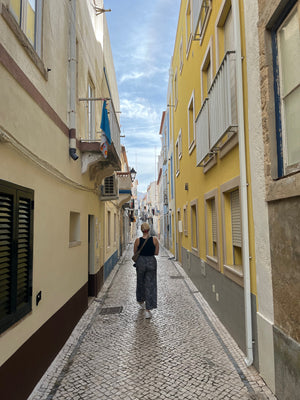
Loading image: Portugal Nazare lane and alley way cobblestone streets. Cute and picturesque walk during our slow travel digital nomad budget stay. Portugal Nazare lane and alley way cobblestone streets. Cute and picturesque walk during our slow travel digital nomad budget stay.

Slowmad vs Traditional Digital Nomad Travel

The difference between fast-moving digital nomads and slowmads is less about where they go and more about how they move.

Fast nomads tend to prioritize variety. New countries, new cities, and new experiences are at the center of the lifestyle. Travel is driven by novelty and the desire to see as much as possible.

Slowmads approach travel differently. They focus on fewer destinations and allow more time for each place to unfold. Instead of constantly moving, they settle in. Instead of chasing experiences, they allow them to happen naturally.

This doesn’t make slowmads less adventurous. It simply means they value depth over speed.

How to Become a Slowmad

Shifting toward a slower way of traveling doesn’t require a complete overhaul of your lifestyle. It often begins with a few intentional decisions.

Staying in one place for at least a month is one of the simplest ways to begin. A longer stay creates the space needed to build routines, meet people, and explore at a more natural pace. It removes the urgency that often defines shorter trips.

Choosing the right destinations also makes a difference. Walkable cities with strong local culture tend to support slow travel well. Places like Valencia, Lisbon, Chiang Mai, and Mexico City offer a balance of livability, affordability, and community.

The first week in a new destination is often the most important. This is when routines begin to take shape. Finding a café you enjoy, locating nearby grocery stores, and identifying comfortable places to work can quickly transform a city from unfamiliar to comfortable.

Over time, these small routines begin to anchor your experience.

Best Destinations for Slowmads

Some destinations naturally lend themselves to the slowmad lifestyle. These places tend to offer reliable internet, affordable housing, coworking spaces, and a sense of community that makes longer stays feel easy.

Cities like Valencia and Lisbon have become popular in Europe for their walkability and culture. Chiang Mai and Bali in Asia offer strong digital nomad communities and a relaxed pace of life. Medellín, Mexico City, and Buenos Aires provide vibrant environments with the infrastructure needed for remote work.

What these destinations share is not just popularity, but livability. They are places where daily life feels enjoyable, not just interesting.

Is the Slowmad Lifestyle Right for You?

Slow travel tends to resonate most with people who are looking for something sustainable rather than fast-paced. Freelancers, remote workers, and entrepreneurs often find that a slower approach makes it easier to balance work and travel.

If your goal is to experience places more deeply, build routines, and reduce the stress that comes with constant movement, the slowmad lifestyle may be a natural fit.

It doesn’t mean you stop exploring. It simply means you give yourself more time to do it.

Conclusion

For many digital nomads, slowing down is not something they plan from the beginning. It’s something they arrive at over time.

After the initial excitement of constant movement fades, a different kind of travel begins to feel more appealing. One that is less about chasing destinations and more about experiencing them fully.

The slowmad lifestyle is, in many ways, a natural evolution. It allows travel to feel less like something you are managing and more like something you are living.

And when you move a little slower, the world often begins to open up in ways that fast travel never quite allows.

Related blog posts.

How to Work Remotely While Travelling Slowly

Many digital nomads begin by moving quickly between countries, but constant travel often leads to burnout. Slow travel offers a different approach, staying longer in each destination to build routines, work productively, and experience places more deeply.

How to travel slowly on short trips

Slow travel isn’t just for long trips. Even a short getaway can feel deeper and more meaningful when you slow down, explore one place, and focus on experiences instead of checklists.

How we stopped time

Our perception of time stretches when life is full of new experiences instead of routine. Our travels have shown us that we can speed up or slow down time at will without a time machine.
Back to top