Skip to content

Digital Nomad Burnout

Dec 15, 2025 6 min reading time

TL;DR - Digital nomad burnout happens when constant travel, unstable routines, and work pressure overlap, leading to exhaustion and disconnection. Slowing down, building routines, prioritizing rest, and creating community can make the lifestyle more sustainable and meaningful.

The digital nomad lifestyle is often presented as the ideal version of freedom. It’s easy to picture working from a laptop in a beautiful place, moving between countries, and having complete control over your time.

From the outside, it looks like everything is working exactly as it should.

But the reality often feels different.

Behind the photos and highlights, many remote workers quietly experience something they didn’t expect when they first started traveling.

Burnout.

It doesn’t always happen immediately. At first, the pace can feel exciting. New places, new routines, and the flexibility to move whenever you want create a sense of momentum.

But over time, that momentum can become difficult to sustain.

Constant movement, inconsistent routines, and the pressure to keep working while everything around you keeps changing can begin to wear you down.

Digital nomad burnout happens when travel, work, and life start to overlap in a way that leaves very little space to rest.

Understanding why this happens is often the first step toward building a more sustainable way of living and working while traveling.

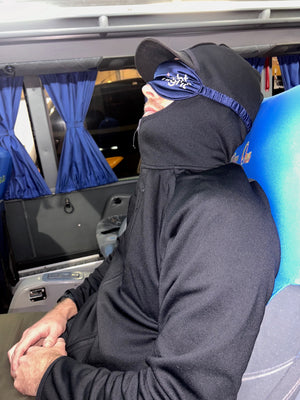
Loading image: Man sleeping on bus ride overnight between La Paz and Uyuni in Bolivia with eye patch and sweater Man sleeping on bus ride overnight between La Paz and Uyuni in Bolivia with eye patch and sweater

What Is Digital Nomad Burnout?

Digital nomad burnout is a form of physical and mental exhaustion that develops when the demands of remote work are combined with the instability of constant travel.

It’s not always obvious at first. It can build gradually over time.

You might notice that you feel more tired than usual, even when you’re not working longer hours. Motivation becomes harder to find. Focusing on work takes more effort than it used to. And perhaps most noticeably, travel itself starts to feel less exciting.

Places that once felt new and interesting begin to blur together. Experiences that used to feel meaningful start to feel repetitive.

Many nomads only recognize burnout once the sense of excitement around travel begins to fade.

Why Digital Nomads Burn Out

Burnout rarely comes from one single cause. It’s usually the result of several small pressures building over time.

One of the most common factors is constant travel. Moving frequently means dealing with a continuous cycle of logistics. Flights, accommodation, transportation, and planning become ongoing tasks that never fully go away. Even when each individual decision feels manageable, the accumulation can become exhausting.

A lack of routine also plays a significant role. Routine helps create a sense of stability, which is important for both mental clarity and overall well-being. When you are constantly changing environments, it becomes difficult to maintain consistent habits. Sleep patterns shift, work schedules fluctuate, and even small daily rituals disappear.

Work itself can also contribute to burnout. Many remote workers feel an unspoken pressure to prove that they are productive, especially when working in unconventional environments. This can lead to longer working hours and fewer boundaries between work and rest.

Loneliness is another factor that often goes unnoticed. Moving frequently makes it harder to build meaningful relationships. Conversations remain brief, and connections are often temporary. Over time, this can create a sense of isolation, even when you are surrounded by new people.

Loading image:

Signs You’re Experiencing Digital Nomad Burnout

Burnout doesn’t always present itself in obvious ways. It often shows up subtly before becoming more noticeable.

You might find yourself dreading the idea of traveling to your next destination, even if it’s somewhere you were once excited about. You may feel disconnected from the places you visit, as if you’re observing rather than experiencing them.

Work can start to feel overwhelming, even when the workload hasn’t changed. Tasks that once felt manageable begin to require more effort. At the same time, a constant sense of fatigue can settle in, making it difficult to fully rest or recharge.

These signals are often easy to ignore, but they tend to build if left unaddressed.

How to Prevent Digital Nomad Burnout

Preventing burnout often involves making small adjustments to how you travel and work rather than making drastic changes.

One of the most effective shifts is simply slowing down. Staying longer in each destination reduces the number of decisions you need to make and removes much of the logistical pressure that comes with constant movement. Travel begins to feel less like a series of transitions and more like a stable experience.

Building routines can also make a significant difference. Finding a café you return to, establishing a consistent work schedule, or incorporating regular movement into your day can create a sense of familiarity, even in a new place. These small patterns help ground your experience.

Rest is another important component. When everything feels new, it’s easy to fill every day with exploration. But rest is not something that should be postponed. Giving yourself permission to have slower days, or even days where you do very little, helps maintain balance.

Returning to places you’ve already visited can also reduce mental fatigue. Familiar environments require less energy to navigate and allow you to settle in more quickly.

Finally, building some form of community can help counteract isolation. Coworking spaces, local events, or even casual conversations with people you see regularly can create a sense of connection.

Loading image:

Slow Travel as the Antidote to Burnout

For many digital nomads, the solution to burnout is not to stop traveling, but to change how they travel.

This is where slow travel naturally enters the picture.

By staying longer in one place, you give yourself the opportunity to build routines, develop relationships, and create a more stable work environment. The pace becomes more manageable, and travel begins to feel less demanding.

Instead of constantly adapting to new environments, you begin to settle into them. This shift reduces stress and allows for deeper experiences.

It’s also why many digital nomads eventually transition into a slower style of travel. What begins as a way to reduce burnout often becomes a more sustainable way of living altogether.

Conclusion

Digital nomad burnout is more common than it appears.

The lifestyle that initially feels freeing can become overwhelming when movement is constant and rest is limited. But burnout does not mean the lifestyle itself is unsustainable.

It simply points to the need for a different pace.

By slowing down, building routines, and creating space for rest, travel can begin to feel balanced again. Work becomes more manageable, and experiences become more meaningful.

Over time, the goal shifts from maintaining constant movement to creating a lifestyle that feels steady, intentional, and sustainable.

And that shift often makes all the difference.

Related blog posts.

How to Work Remotely While Travelling Slowly

Many digital nomads begin by moving quickly between countries, but constant travel often leads to burnout. Slow travel offers a different approach, staying longer in each destination to build routines, work productively, and experience places more deeply.

How to travel slowly on short trips

Slow travel isn’t just for long trips. Even a short getaway can feel deeper and more meaningful when you slow down, explore one place, and focus on experiences instead of checklists.

How we stopped time

Our perception of time stretches when life is full of new experiences instead of routine. Our travels have shown us that we can speed up or slow down time at will without a time machine.
Back to top