Skip to content

How we stopped time

Mar 2, 2026 7 min reading time

TL;DR - Our sense of time stretches when life is full of novelty, challenge, and attention instead of routine and distraction. This post argues you can “slow down time” without travelling the world simply by prioritizing the hobbies you love, exploring new places, doing things you’re bad at, and cutting distractions so ordinary moments actually become memories.

Netflix taught us something

Time is moving more slowly for us. It’s a fact.

Netflix’s episode “Memory” within The Mind, Explained series changed the way we look at time.

For those who haven’t seen the 20 minute episode, the main takeaway is that new memories closely tie our perception of time to the volume of new and unique memories we create. Less memories means time seems to pass more quickly. More memories means time passes slower because we have more distinguishable events to help map out the past.

Fortunately, through our world travels and nomadic lifestyle, we’ve uncovered ways we can each slow down time, irrespective of where we are.

Loading image:

The depressing part

As adults, we get jobs, start families, go to and from work, grocery shop, cook, eat, sleep, and repeat tomorrow. We have little time left to make unique memories that will stand out to us later. We adopt routines that force us to live out the same day over and over. Days, weeks, and months blend into one another with no significant difference. This creates an illusion that time speeds up and it’s why we struggle to recall what we did last Tuesday or even yesterday. Our memories are not getting worse as we get older. Our brain simply deems less stuff worth remembering.

The uplifting part

We can slow down time. Our perception of it’s passing, that is. The reason we say this is because we’ve experienced it. As expected, time sped up rapidly when we got jobs and settled into a routine for much of our 20s. But it came to a screeching halt when we became nomads with zero chance of keeping a routine. Sleeping in hundreds of different beds and visiting countless new places makes it near impossible to live the same day twice. After witnessing the rate of time slow as we lived spontaneously, we’re keen to uncover how to prolong the finite time we have left that isn’t dependent on travelling the world. There are takeaways here for you too.

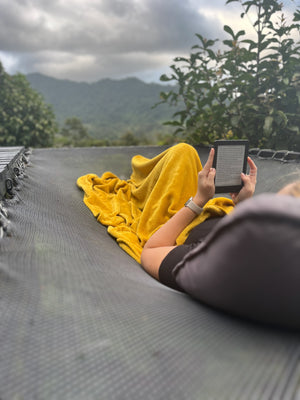
Loading image: Digital nomads travelling in Costa Rica working remotely. Slow travel vegan travel and budget travel. Reading kindle in El Tigre overlooking forest. Digital nomads travelling in Costa Rica working remotely. Slow travel vegan travel and budget travel. Reading kindle in El Tigre overlooking forest.

What do we do about it?

Whether you’re an avid traveller, digital nomad, entrepreneur, starting a family, or living life on your terms, we can each find ways to slow down time that don’t require selling your house and moving into a backpack.

Hobby it up

Run, sing, cook, read, knit — whatever it might be, give it more time and space. Don’t let that life-depleting thing that pays the bills take up too much of your precious time. Especially if it means doing less of what you love. For most of us, work is where hours disappear into routine. We make most of our memories with the limited time we have remaining outside the 9-5.

Explore

Changing your physical environment is an obvious one. But we don’t need to country-hop or get on planes to be somewhere new. Hop on the subway, get in the car, do what you need to do to find somewhere you haven’t been. Walk around with your head up, eyes open, phone in your pocket, taking in all the new sensations. You will create new memories if you open yourself up to them.

Loading image:

Be bad at something

Learn a language, try to paint, or go to improv classes. Put yourself in unfamiliar positions where you’re forced to learn. When you’re bad or uncomfortable at something, your brain freaks out, taking note of everything and etching the experience deep into your memory.

Avoid the Easy Distractions

Try eating a meal, going on a run, commuting to work, going on a road trip, or even taking a flight, with no distractions. This means no phone, no laptop, no iPad, no shows, no music, no podcasts, no games. Nothing.

We often drive with no music or podcasts. We crudely call it raw dogging the drive since we’re not protecting ourselves from silence, or worse, original thought.

By going distraction-free, your increasing your attention span. Experience tells us that when we’re distracted, time flies by. We're sure we can all relate to inhaling a meal without registering a single bite because we were distracted watching something. Improving your attention span will lead to time slowing down.

Why travel works.

It’s no wonder this time slowing revelation came to us after travelling nonstop for 2.5 years. We’re hobbying it up by doing something we love every single day. We’re exploring new places endlessly with our brains on high alert and all our senses activated. We’re eating, walking, hiking, cycling, and driving distraction free taking in every little detail, flavour, smell, and sound we can. And we’re doing this all in places where we’re terrible at navigating directions, adopting local customs, speaking the language, or knowing the first thing about local cuisine. Our brains are on high alert the entire time, inevitably making new memories and slowing down time.

Despite travel being the strongest antidote to our warped sense of time, we do possess tools that can help us slow everything down.

  • Prioritize your time with things that you enjoy.
  • Explore new and old places relentlessly with all your attention.
  • Embrace discomfort and do things you’re terrible at.
  • Fight distraction so that you can notice the things around you.

Considering time is the one truly finite thing we each have, it's worth exploring every avenue to preserve this most precious resource.

Here are 2 different ways you can slow down time today:

Try one of these for a week...

  • Explore somewhere new in your own city.
  • Try a cuisine you've never tried.
  • Walk through a park you’ve only driven past.
  • Leave your phone at home or deep in your bag.

Go deviceless

Challenge yourself by going one full day this week without digital distractions during meals, commutes, workouts, or downtime. Pick up a book, start a journal, watch the sunset, stare at the ceiling.

Related blog posts.

How to Work Remotely While Travelling Slowly

Many digital nomads begin by moving quickly between countries, but constant travel often leads to burnout. Slow travel offers a different approach, staying longer in each destination to build routines, work productively, and experience places more deeply.

How to travel slowly on short trips

Slow travel isn’t just for long trips. Even a short getaway can feel deeper and more meaningful when you slow down, explore one place, and focus on experiences instead of checklists.

How we stopped time

Our perception of time stretches when life is full of new experiences instead of routine. Our travels have shown us that we can speed up or slow down time at will without a time machine.
Back to top