Skip to content

Slow travel = budget travel

Feb 2, 2026 5 min reading time

TL;DR - Slow travel is more exciting, fulfilling, and budget friendly than traditional fast travel. Stress less about seeing everything and have a more authentic experience by living like a local. Move around less, eat out less, and live within your means. You'll be more appreciative of your travels, create meaningful memories along the way, and spend less money.

Slow travel is not what it sounds like.

Slow travel is a terrible name for what it actually is. It suggests that travelling slowly is in fact slow, dull, or boring.

We argue, instead, that slow travel is better than fast travel. Slow travel is more exciting and memorable.

It’s easy to imagine a trip where you're doing touristy things all day, spending your life's savings, and coming home in the need of another vacation. It's easy to imagine because you've done it already.

Loading image:

Long-term stay discounts

The premise of slow travel is staying in one place for a longer period of time. Often, you'll become eligible for extended stay discounts with many accommodation providers, like hotels, Airbnb, or Vrbo. Some offer over 50% off for monthly stays.

Staying longer avoids the costs of relocating more often. These include getting to and from the airport, flying, and restocking your food.

We received a 20% discount for staying a month in our Santiago, Chile Airbnb. Our rent was much cheaper than what we paid monthly in Toronto and we didn't have to pay for wifi, heating/cooling, insurance, etc.

Lower transportation expenses

Slow travel reduces the need for expensive flights. Instead of hopping from city to city or country to country, you can explore more of a single destination, reducing the amount you spend on flights, trains, buses, and ubers.

A $800 return flight to Europe is very different for slow and fast travellers. If you stay for a month vs. a week, the cost of that flight spread out over each day is significantly different.

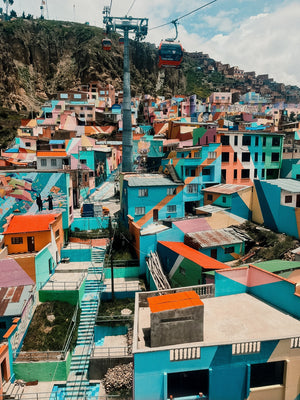
When you stay put for a while, you can begin considering things like monthly transit cards or renting a bike. We paid $0.35 to ride La Paz's amazing cable car in Bolivia and $1.00 for the metro in Santiago. A bargain compared to most North American cities.

You can also combine long-term accommodation discounts with cheaper transportation costs. We capitalized on our monthly stay discount in Santiago by going on 2 weekend trips and leaving our Airbnb empty. Between the low-cost of local buses and flights and the benefit of leaving clothes and food behind we didn't need, it felt like luxury budget travel at its peak.

Loading image: Beautiful vibrant and colourful La Paz village passing over teleferico Beautiful vibrant and colourful La Paz village passing over teleferico

Cooking and local eating

How many times have you missed a home-cooked meal while you’re away? Us too.

The expenses of eating out can quickly add up when you’re traveling and the excitement can fizzle. The most suitable slow travel accommodations often come with kitchens allowing you to prepare your own meals and save money on food. Cooking while travelling is almost always cheaper than eating out.

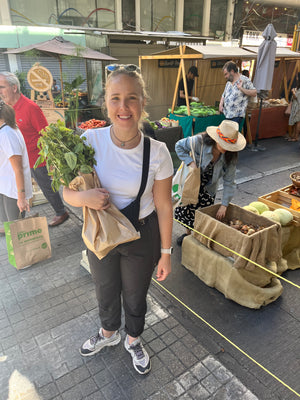
Shopping at supermarkets and local markets can also be a fun experience and teach you a lot about the local cuisine. You can quickly see what locals are eating.

Pro-level budget travel tip: Treat the supermarket or local market as a tourist outing. Being among locals and buying the food they buy is the epitome of slow travel. Outside of what you buy, it’s free too.

Immersive experiences

While not a direct financial benefit, the immersive and local experiences that come with slow travel can contribute to more rewarding, authentic, and richer travels.

By truly getting to know a place, you might discover hidden and local secrets that are often more affordable than tourist-focused attractions with inflated prices.

In Chile, we opted to take Spanish lessons during our visit. We met many other like-minded slow travellers, ended up taking $1.00 salsa lessons one night in the street with other students, and met friends who we travelled more with after our classes ended.

Ella brilliantly took advantage of a local Pilates studio’s initiation promotion, getting multiple weeks' worth of classes at a discounted rate. Despite having to take pilates in a foreign language, Ella exercised, saved money, and now has a memorable story to tell.

Loading image: Digital nomads travelling the world in Santiago Chile. Working remotely, slow travel, vegan travel, and budget travel. Visiting local market for fresh produce and vegetables, home cooked meal. Digital nomads travelling the world in Santiago Chile. Working remotely, slow travel, vegan travel, and budget travel. Visiting local market for fresh produce and vegetables, home cooked meal.

Low cost of living hotspots

For those who are fortunate to participate in slow travel, you can take it to pro-levels by visiting low cost of living destinations. You can stretch your budget much further in places with less expensive food and accommodation. You may need to compromise on some comforts you're accustomed to, but being able to live on literally dollars a day can be quite appealing to a budget traveller.

Work remotely

Combine living in a low cost of living hotspot with working remotely and you’re golden. Digital nomad living can be significantly cheaper than living a conventional western lifestyle when you seek out more affordable travel destinations.

By staying in one place for an extended period, you can maintain a stable work environment and keep earning an income while you travel. This financial stability can make travel more sustainable in the long term.

Wrap it up!

Slow travel offers a unique approach to exploring the world that can be both financially beneficial and deeply fulfilling. Focus on reducing accommodation, transportation, and food costs. Seek out opportunities to travel to cheaper travel destinations and explore remote work opportunities.

Related blog posts.

How we stopped time

Our perception of time stretches when life is full of new experiences instead of routine. Our travels have shown us that we can speed up or slow down time at will without a time machine.

Our travel credit card roster

We break down the 3 types of credit cards you need for travel; one for spending, one for insurance, and one for points. If you can find one that does 2 of these things, you're golden.

Our digital nomad tech kit

2+ years of trial and error to find the digital nomad tech kit that actually works for us. All you need is a good laptop, a good backpack, minimalist accessories, and good connectivity plans.
Back to top